
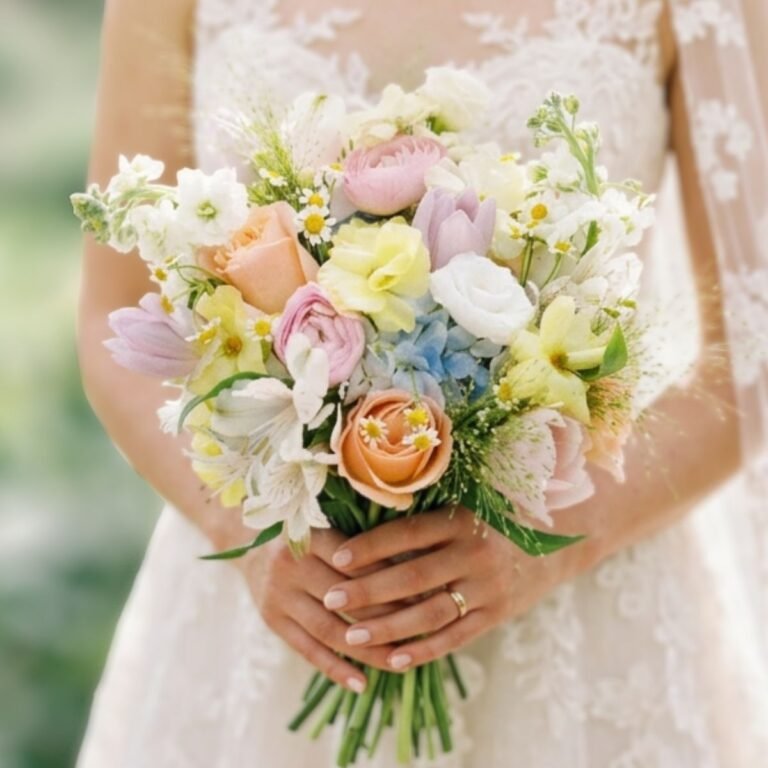
Flowers are beautiful, but unfortunately, they don’t last forever. Whether it’s a bouquet from someone special, flowers from your wedding day, or a thoughtful gift, it’s natural to want to hold on to those memories for a little longer.
One way to preserve your flowers is by drying them. But what is the best method to preserve your flowers?
Two of the most popular methods are traditional air-drying and silica gel drying. While both help preserve flowers beyond their natural lifespan, they produce quite different results. Let’s explore the differences between air-drying and silica gel drying, and find out which is better for preserving the natural beauty of your flowers.
1. What Is Air-Drying?
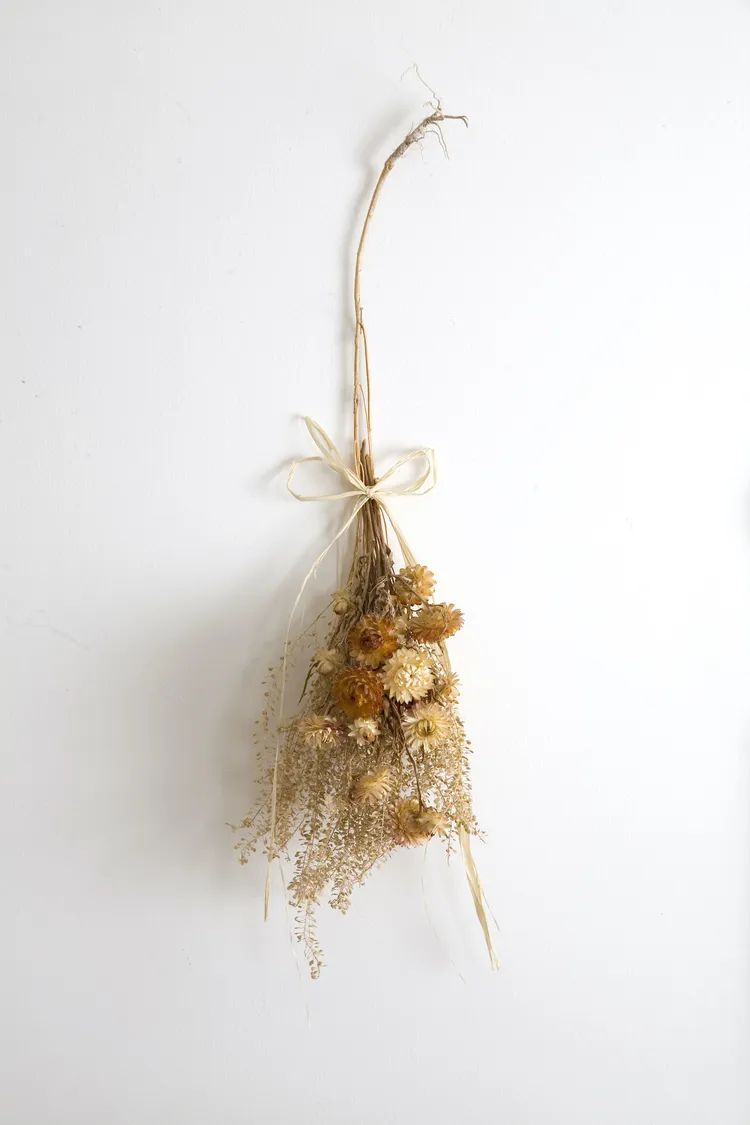
Air-drying is one of the oldest and simplest ways to preserve flowers. It involves hanging flowers upside down in a dry, well-ventilated space and allowing them to lose moisture naturally over time.
The process is relatively straightforward:
Gather your flowers into small bunches and secure their stems with a string or rubber band.
Hang them upside down in a cool, dry and preferably dark area.
Leave them undisturbed for approximately two to three weeks, depending on the type and thickness of the flowers.
Once completely dry, carefully remove them and arrange them as desired.
As the flowers gradually lose moisture, their petals and stems become dry and stiff. The result is a beautiful, rustic appearance that many people associate with vintage floral arrangements.
What do air-dried flowers look like?
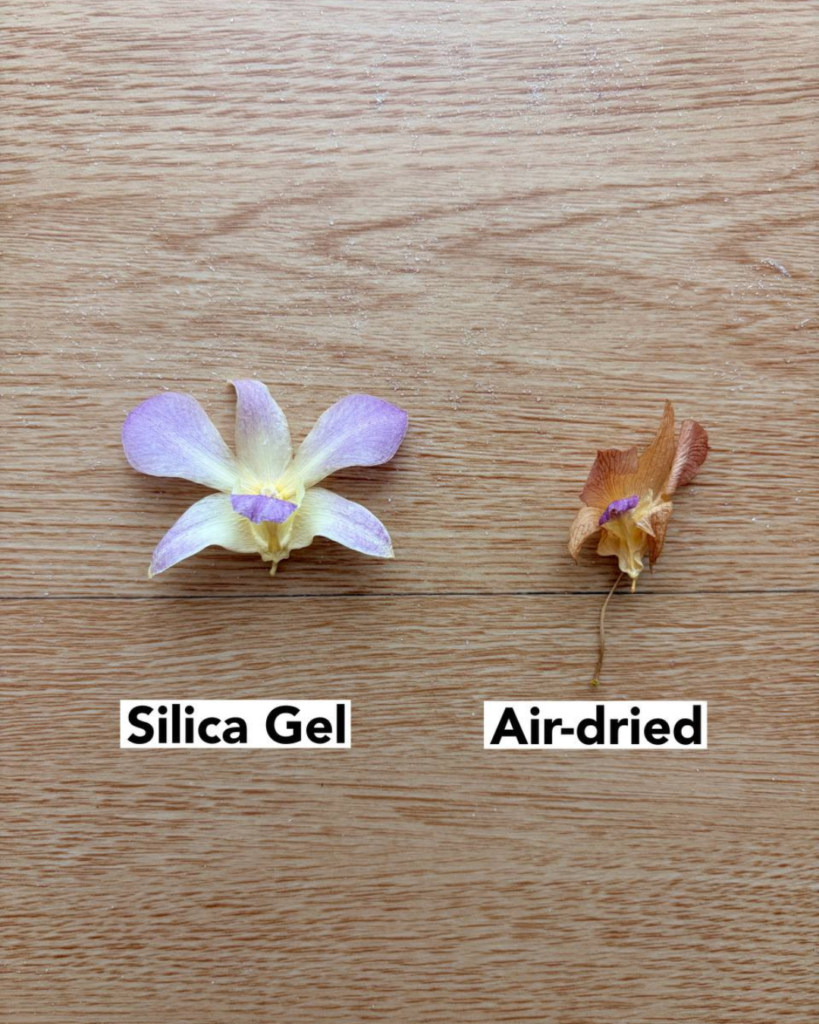
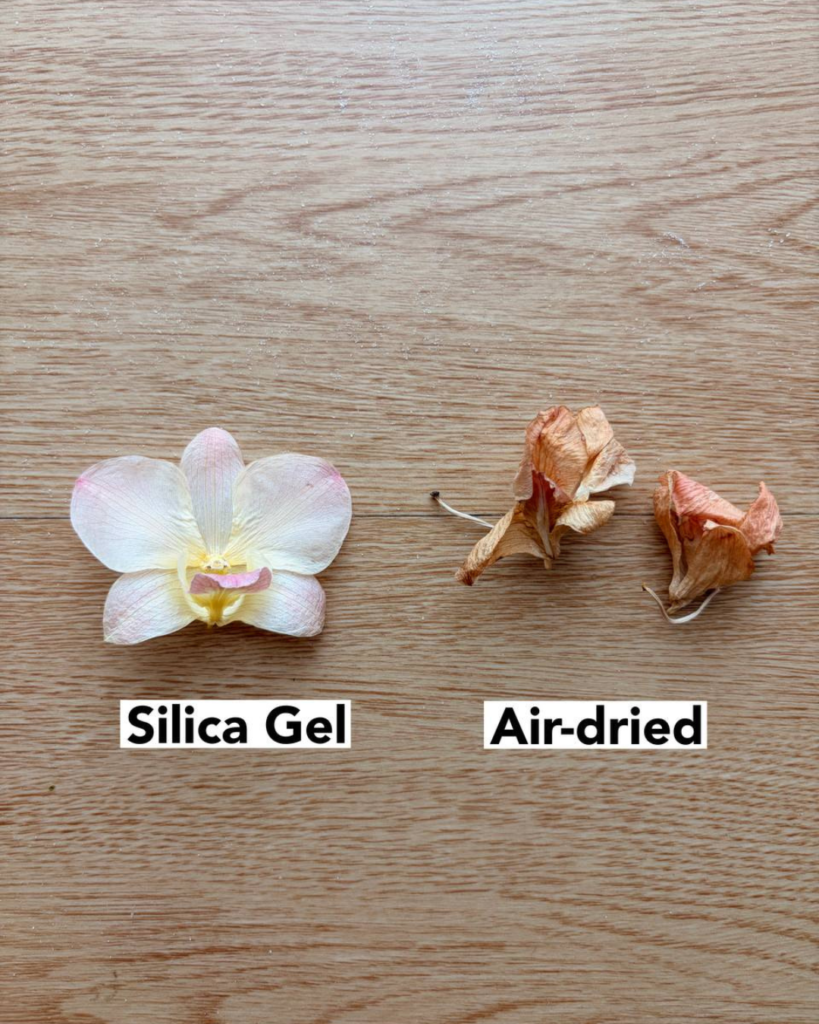
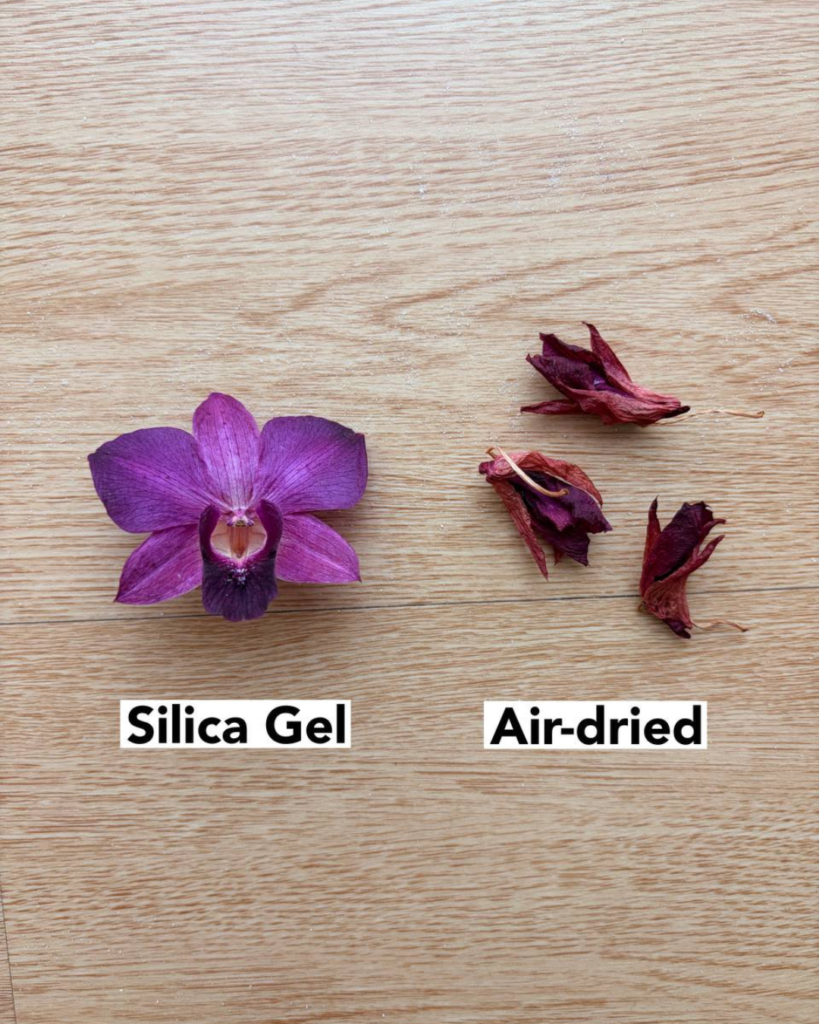
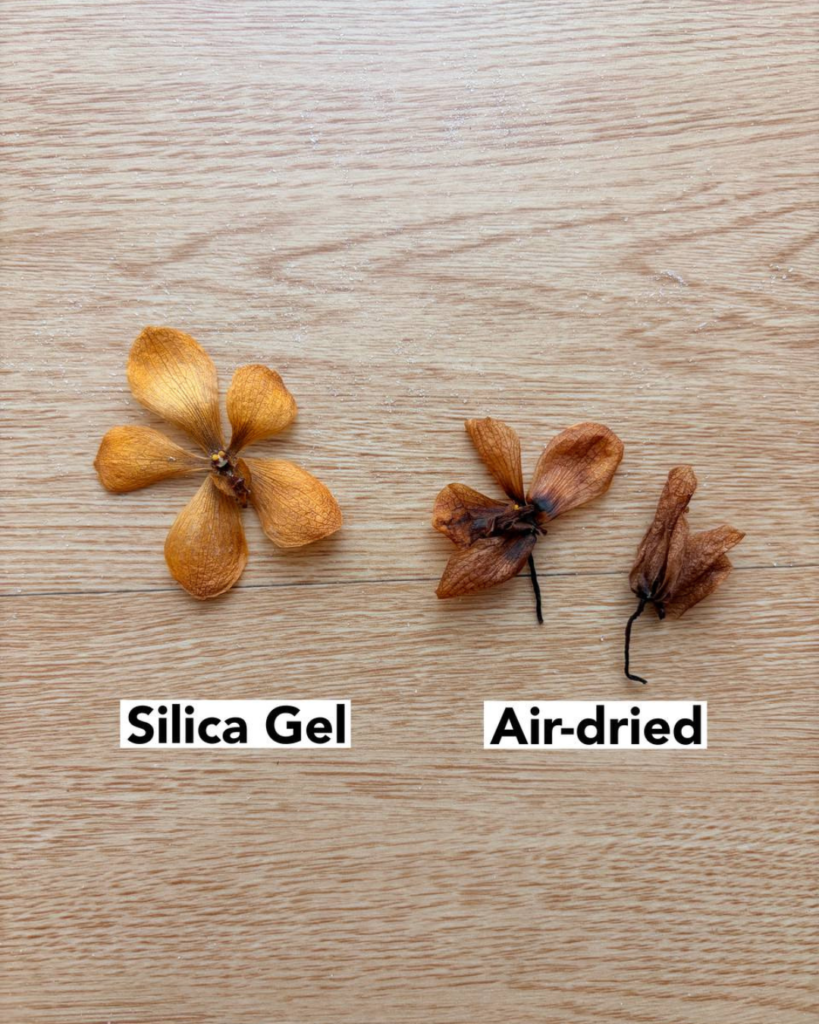
Air-dried flowers tend to have a more muted, earthy appearance. Their petals may shrink, curl or become slightly distorted as they lose moisture. Some flowers also become darker or change colour during the process.
This method works particularly well for flowers with naturally sturdy stems and petals, such as lavender, baby’s breath and statice. However, delicate flowers with fuller petals may struggle to retain their original shape.
2. What Is Silica Gel Flower Drying?
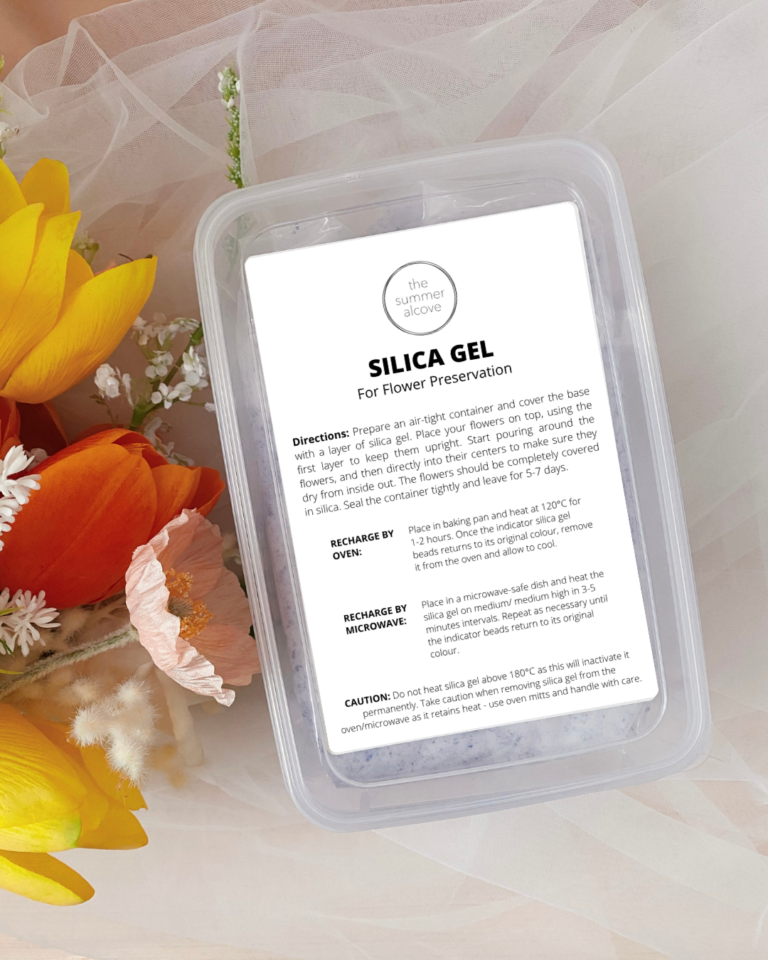
Silica gel drying is a flower preservation technique that uses silica gel crystals to absorb moisture from flowers. Unlike air-drying, which allows flowers to dry gradually in the open air, silica gel helps remove moisture more quickly while supporting the flower’s natural shape.
Here’s how the process generally works:
Pour a layer of silica gel crystals into an airtight container.
Carefully place the flowers inside, making sure they are positioned in their natural shape.
Gently pour more silica gel around and over the flowers until they are completely covered.
Seal the container and allow the silica gel to absorb moisture over the next few days.
Once sufficiently dry, gently remove the flowers and brush away any remaining crystals.
Depending on the flower type, size and thickness, the process typically takes around two to seven days.
What do silica gel-dried flowers look like?
One of the biggest advantages of silica gel drying is its ability to retain a flower’s original appearance. Because the flowers are supported by the silica gel crystals throughout the drying process, their petals are less likely to collapse or lose their shape.
Silica gel drying also generally preserves colours better than traditional air-drying. This means flowers can retain more of their original vibrancy, although some colour changes are still possible. This makes silica gel particularly useful for preserving delicate flowers such as roses, peonies, dahlias and other flowers with intricate petal arrangements.
3. Air-Drying vs. Silica Gel Drying: What’s the Difference?
Although both methods preserve flowers by removing moisture, the results can be quite different.
Here’s a side-by-side comparison:
Air-Drying | Silica Gel-Drying | |
Drying Time | 3-6 weeks | 1-2 weeks |
Colour Retention | More colour fading and darkening | Generally better colour retention |
Shape Retention | Petals tend to shrink or curl | Better preservation of original shape |
Appearance | Vintage, rustic, muted | More natural-looking and vibrant |
Difficulty | Easy | Requires more care and materials |
Cost | Almost cost-free | Higher initial cost |
Best Suited For | Sturdy flowers and foliage | Delicate and brightly coloured flowers |
Colour Retention
One of the most noticeable differences between the two methods is how well they preserve a flower’s original colour.
With air-drying, flowers lose moisture gradually through exposure to the surrounding air. During this process, some flowers may become darker, duller or develop a more muted appearance.
Silica gel, on the other hand, absorbs moisture more quickly. This generally helps flowers retain more of their original colour and vibrancy.
However, it’s worth remembering that no drying method can guarantee that flowers will look exactly as they did when freshly cut. Natural pigments, flower varieties and drying conditions all influence the final result.
Shape and Petal Preservation
If retaining the original shape of your flowers is important, silica gel drying generally has the advantage.
When flowers are air-dried, gravity and moisture loss can cause petals to droop, curl or shrink. This is particularly noticeable in flowers with delicate or densely layered petals.
Silica gel crystals help support individual petals as the flower dries, allowing it to maintain a fuller and more natural-looking appearance.
For flowers such as roses and peonies, this can make a significant difference.
Drying Time
Another major difference is the amount of time required.
Air-drying is a slower process, typically taking 3-6 weeks. Silica gel drying can shorten this to just a few days.
For anyone hoping to preserve flowers from a special occasion, such as a wedding bouquet, this shorter drying time can be particularly useful.
4. Which Flowers Are Best for Each Drying Method?
Not all flowers respond equally well to drying. Their petal thickness, moisture content and natural structure can influence how well they retain their appearance.
Flowers that work well with air-drying:
Lavender: Its naturally slender stems and sturdy flower clusters make it relatively easy to air-dry.
Baby’s Breath: Its delicate clusters of tiny flowers are well suited to traditional drying.
Statice: Known for its papery petals, statice generally retains its appearance well after drying.
Eucalyptus: Its foliage can be dried for decorative arrangements.
Flowers that benefit from silica gel drying:
Roses: Silica gel helps preserve their layered petals and fuller appearance.
Peonies: Their abundant, delicate petals benefit from the additional support during drying.
Dahlias: Their intricate petal arrangements are better maintained with a supportive drying medium.
Carnations: Silica gel helps retain their characteristic ruffled appearance.
Chrysanthemums: Their many layers of petals can benefit from silica gel’s shape-preserving properties.
Of course, these are general guidelines rather than strict rules. The condition of the flowers, their maturity and the drying environment can all affect the final outcome.
5. So, Which Flower Drying Method Should You Choose?
Ultimately, the better method depends on what you want your preserved flowers to look like.
If you love the rustic, vintage charm of dried flowers and prefer a simple, inexpensive method, air-drying is a wonderful option.
However, if you want to preserve the natural beauty of a flower as closely as possible, silica gel drying is generally the better choice. This is especially important when preserving flowers that hold sentimental value.
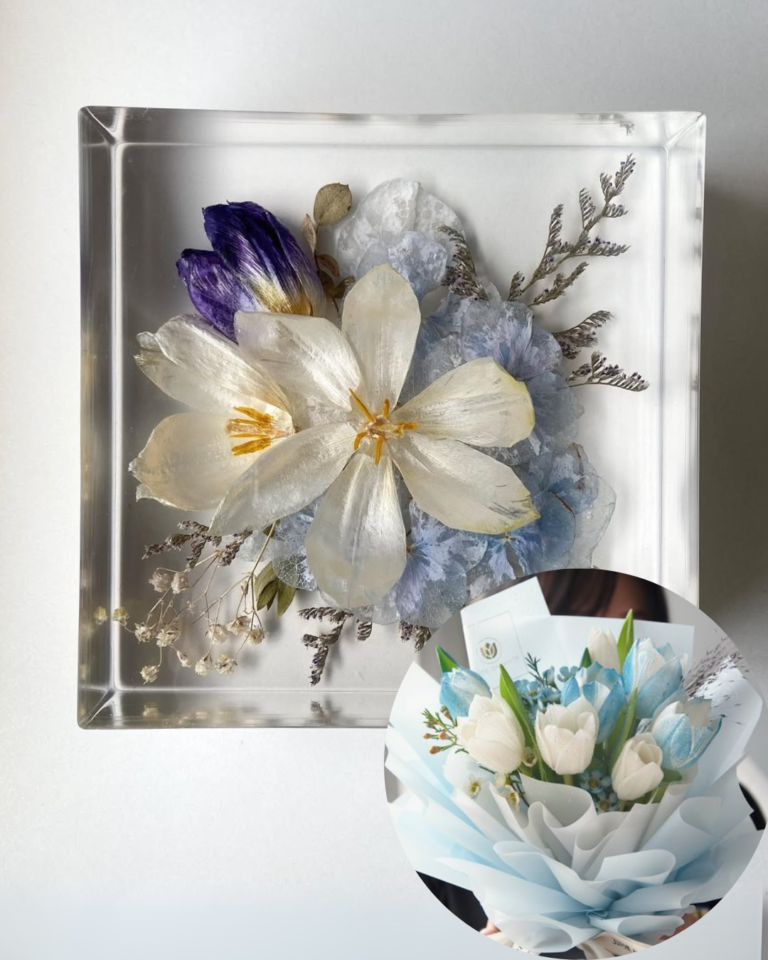
Think about your wedding bouquet, flowers received from a loved one, or a bouquet from a memorable holiday. These flowers are more than just decorative arrangements. They represent moments and memories that you may want to cherish for years to come.
Being able to retain their original shape and colour can make the preservation process even more meaningful.
FAQ
Is silica gel better than air-drying flowers?
Generally, yes, if your priority is preserving a flower’s original shape and colour. Silica gel absorbs moisture more quickly and supports the petals during the drying process. Air-drying is a simpler and more affordable alternative, but it may result in more noticeable changes to the flower’s appearance.
How long do silica gel-dried flowers take to dry?
Silica gel-dried flowers generally take between 1 to 2 weeks. Thinner flowers require less time, while larger flowers with thicker or denser petals may need longer.
Do silica gel-dried flowers retain their colour?
Silica gel generally offers better colour retention than traditional air-drying. However, some colour changes are inevitable, depending on the flower variety, its original condition and the drying process.
Can all flowers be dried using silica gel?
Many flowers can be dried using silica gel, including roses, peonies, carnations and dahlias. However, results vary depending on the flower’s structure and moisture content. Some delicate flowers may still be difficult to preserve perfectly.
Can silica gel be reused for flower drying?
Yes! Silica gel can generally be reused once it has absorbed moisture and is properly reactivated according to the manufacturer’s instructions. This makes it a worthwhile investment for those who regularly preserve flowers.
How should I store dried flowers?
Dried flowers are sensitive to moisture, direct sunlight and physical damage. Store them in a cool, dry place away from direct sunlight. An airtight container with a fresh desiccant packet can also help protect them from excess moisture.